
Beginner Guides5 min read
The Beginner's Guide to Exploring the Outdoors
How to choose a first outing: a place you can leave, a time of day, a turnaround, and one repeat before you try anything bigger.
Site search
64 results across the site
Pages and tools
Beginner path
A simple first-week path for new outdoor explorers with short activities, safety basics, and beginner resources.
Printables
Printable outdoor checklists, nature scavenger hunts, journal templates, and planning worksheets.
Interactive tool
Build a month-by-month outdoor activity plan for backyards, parks, trails, classrooms, and short nature walks.
Educator packs
Ready-to-use nature activity bundles for classrooms, homeschool groups, clubs, and outdoor learning days.
Trust
How The Nature Explorers creates, reviews, updates, and sources beginner outdoor education content.
Safety
Important safety context for using outdoor guides, activities, checklists, and planning resources.
Topics
Beginner
Simple, confidence-building guides for people who are just starting to explore outdoors.
Family
Outdoor activities, games, and nature prompts for families, classrooms, and curious kids.
Learning
Beginner-friendly wildlife, plant, weather, and ecosystem learning for every walk.
Packing lists, safety basics, trail planning, and practical outdoor readiness.
Seasonal
Month-by-month ideas for noticing seasonal changes, wildlife patterns, and trail conditions.
Protect
Responsible exploring, Leave No Trace habits, wildlife respect, and local stewardship.
Guides
How to choose a first outing: a place you can leave, a time of day, a turnaround, and one repeat before you try anything bigger.
Five beginner outdoor activities with a setup, a time box, and a stop rule for each, from a slow loop to watching one living thing.
Three nature-walk kits: 30 minutes, a half day, and weather add-ons, plus what to leave at home.
On-trail decisions for beginner hikers: weather that changes, a route that stops matching the plan, a group that splits, and how to turn around.
Ten family outdoor activities, each with a setup, a time box, an age note, and a limit that keeps the place intact.
Fifty one-line nature prompts for kids, plus how to run a single prompt as a short session without collecting or crowding wildlife.
What to say when a child pockets a rock, pokes an insect, shouts near an animal, or asks to take something home.
A small-space method for yards, balconies, and sidewalk trees: one square of ground, a weekly station, and what to do when nothing seems to be there.
How to write the first nature journal page today: the setting, one labeled sketch, and one question you leave unanswered.
How to name a common bird from size, shape, color pattern, behavior, and habitat, and when to stop at the group instead of a species.
How to describe one plant you have not named yet: the whole plant, the leaves, the flowers, and the point where you stop.
The seven Leave No Trace principles, each with one example and one mistake that does the damage.
One activity you can run in spring, summer, autumn, and winter, each with the hazard that ends it.
How to plan one longer day outside and still sleep at home: the route, the shared message, the weather window, and when to shorten it.
What to wear for heat, rain, wind, and cold, and the sign in each case that means turn around.
How to record a track, compare a few common patterns, and stop when the print does not earn a species name.
What to look at on a forest walk: the canopy, the understory, the edge, an opening, and a five-detail note.
How to use blazes, junction signs, map boards, closures, and reassurance markers, and what to do when they disagree.
A phone sequence for one nature photo: find the light, move your feet, keep one subject, and stop before the picture costs the place.
Adult rules for a walk with animals nearby: distance, no feeding, nests, pets, food in the pack, and young animals you find.
Home and neighborhood actions: a plant that belongs here, one bag of litter, a community-science photo, and the jobs beginners should not lead.
How to rehearse a first hike: choose a marked loop, read four numbers, set time checkpoints, and review the same day.
How to keep a nature journal going after the first page: one place, one comparison, and what to do when you miss a week.
Twelve months, each with one observation, one short activity, and the safety note that ends it.
How to practice one Leave No Trace principle on a family outing, from the choice the day before to one repair at the end.
Learn how to compare trail distance, elevation, surface, navigation, exposure, current conditions, and group needs before choosing a first hike.
Understand elevation gain, altitude, grade, terrain, and trail difficulty ratings so you can compare hikes without relying on one misleading number.
Estimate hiking time from your own pace, distance, elevation, terrain, breaks, weather, and group needs instead of relying on a universal speed.
A practical guide to yielding, passing, group behavior, pets, wildlife, waste, muddy trails, and sharing outdoor spaces with care.
Learn to read an hourly hiking forecast, alerts, precipitation, storms, wind, heat, cold, and terrain-driven changes before making a go-or-no-go plan.
Learn a repeatable, observation-first process for narrowing tree identities using form, leaves, twigs, bark, buds, fruit, habitat, and season.
Learn to notice, describe, locate, and remember bird sounds using rhythm, repetition, pitch, tone, behavior, habitat, and careful field notes.
Identify the main cloud families by shape, height, coverage, and growth while learning what clouds can—and cannot—tell you about changing weather.
Understand what makes a habitat, how forests, meadows, wetlands, and cities differ, and how to read a place through conditions, resources, and signs of life.
Use beginner phenology to track buds, blooms, insects, bird activity, fruit, leaf color, and other recurring seasonal changes in one familiar place.
A beginner guide to finding wildlife, plants, weather, and seasonal change on city streets, in small parks, and close to home.
A practical framework for checking trail surfaces, grades, widths, rest points, facilities, sensory conditions, and transportation around individual access needs.
Short, flexible nature-walk activities for young children, with calm guidance for supervision, snacks, water, plants, and wildlife.
A flexible sensory nature-walk framework for noticing color, sound, texture, scent, air, and movement without touching or tasting unknown things.
A step-by-step first-camping plan covering frontcountry campgrounds, rules, food and wildlife, fires, weather, arrival, and a simple one-night schedule.
Resources
Preparation
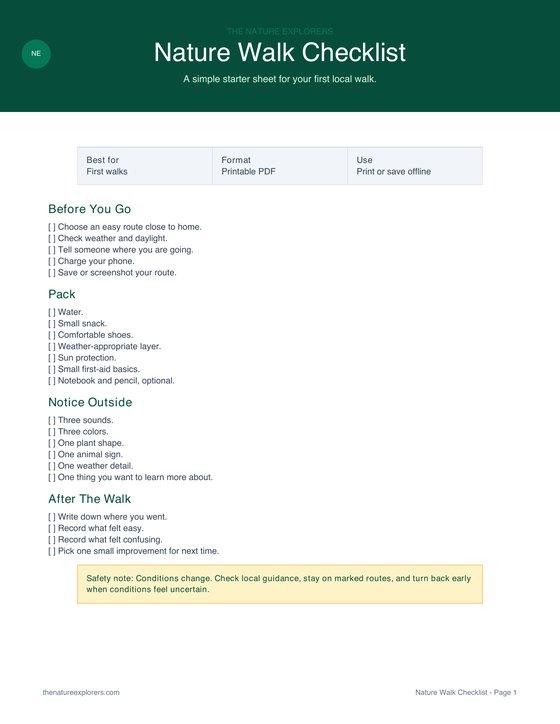
A one-page starter checklist for choosing a route, packing basics, and noticing more outside.
1 page · Best for first walks
Preparation
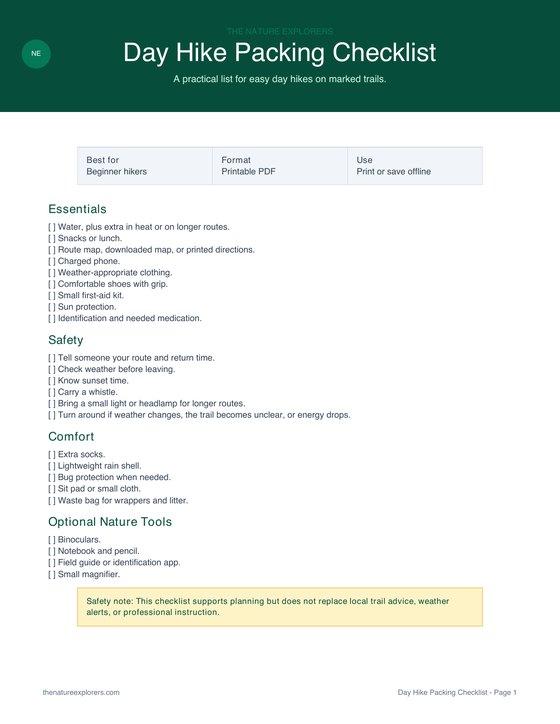
A practical day-hike packing list organized by essentials, weather, safety, and comfort.
1 page · Best for beginner hikers
Safety
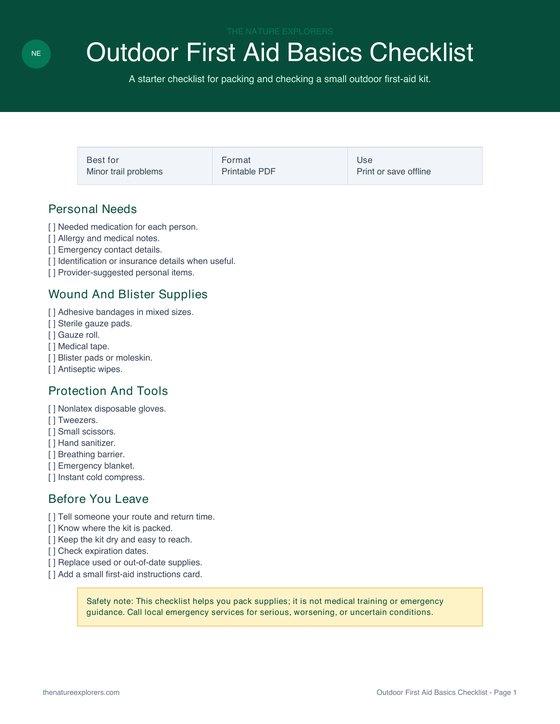
A beginner checklist for packing first-aid supplies, personal medications, emergency contacts, and routine kit checks before outdoor outings.
1 page · Best for minor trail problems
Family
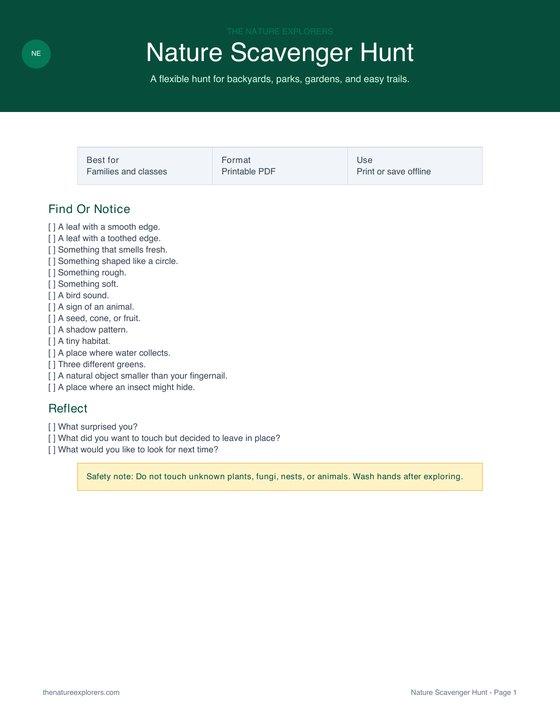
A flexible scavenger hunt for backyards, parks, and easy trails with prompts for all ages.
1 page · Best for families and classes
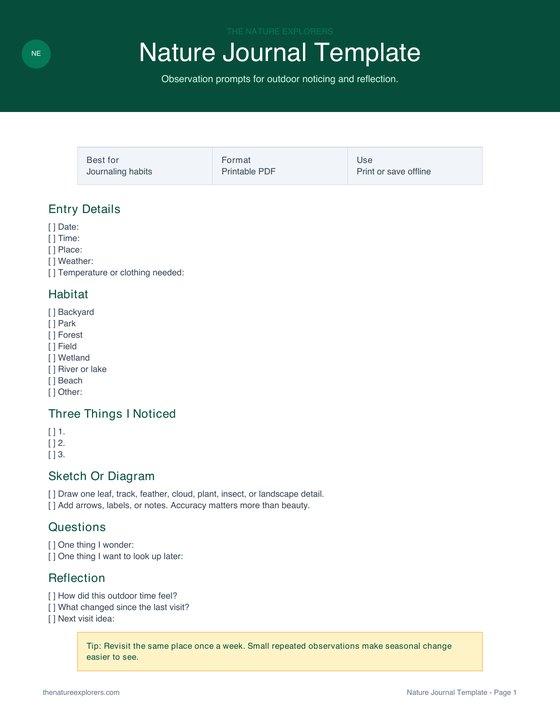
Mindfulness
Observation prompts for date, weather, habitat, species, sketches, and reflections.
1 page · Best for journaling habits
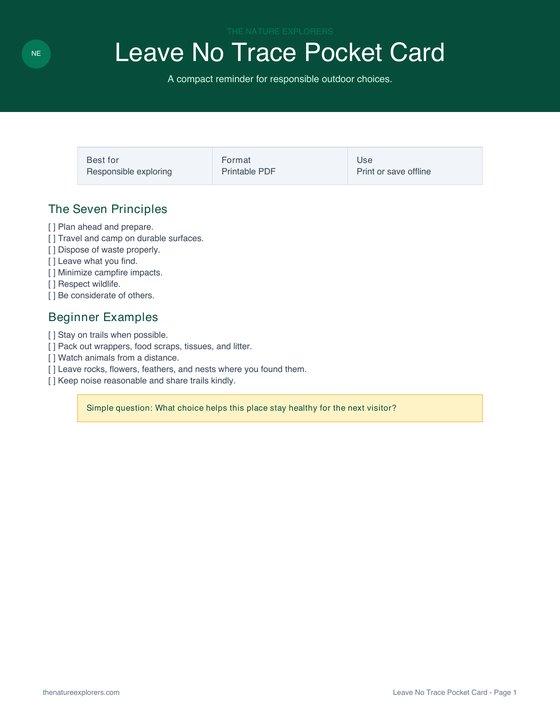
Conservation
A compact reminder of the seven Leave No Trace principles with beginner examples.
1 page · Best for responsible exploring
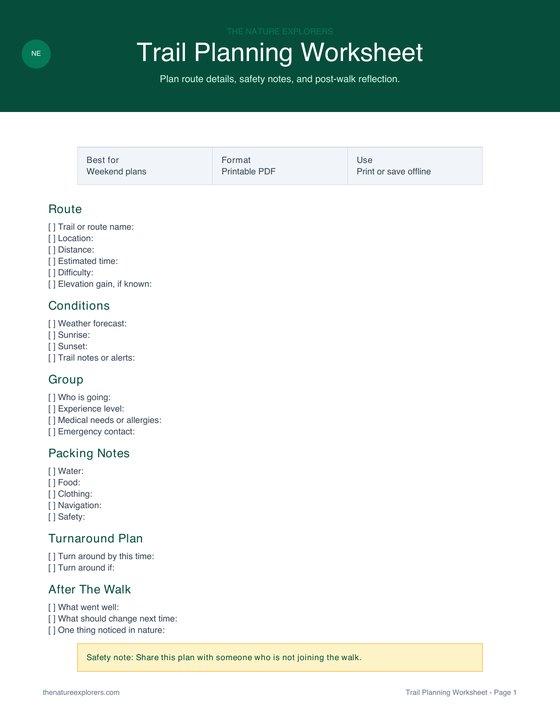
Planning
Plan route distance, timing, weather, transport, emergency details, and post-walk notes.
1 page · Best for weekend plans
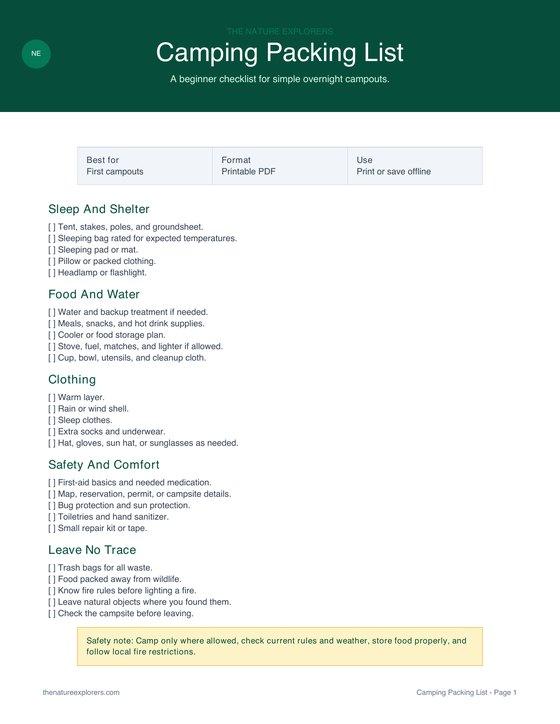
Preparation
A beginner camping checklist covering sleep, food, water, clothing, camp safety, cleanup, and comfort basics.
1 page · Best for first campouts
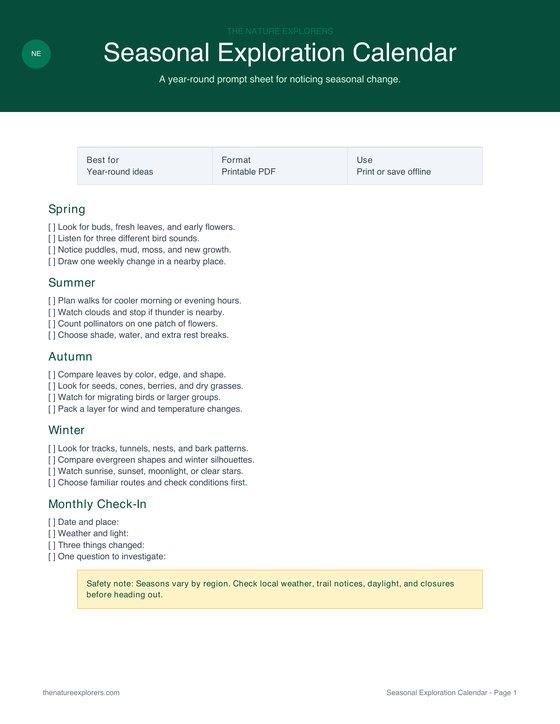
Seasonal
A year-round activity prompt sheet for noticing seasonal changes in any local outdoor space.
1 page · Best for year-round ideas
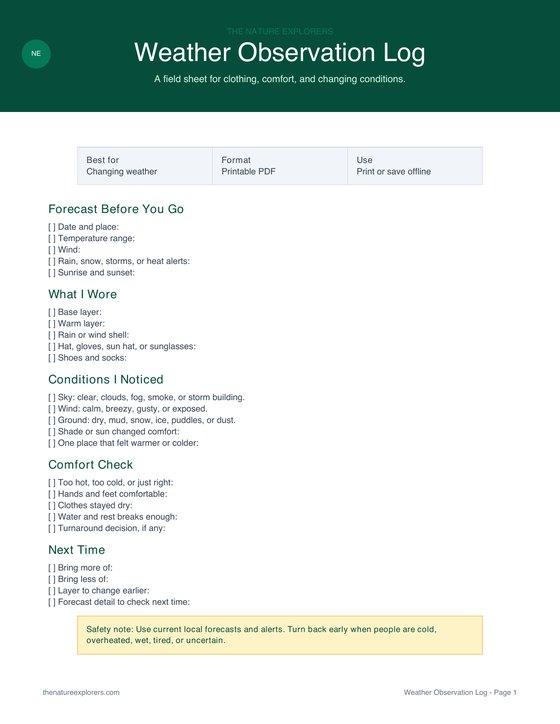
Preparation
A simple field sheet for recording forecasts, sky conditions, temperature feel, wind, layers worn, and lessons for next time.
1 page · Best for changing weather
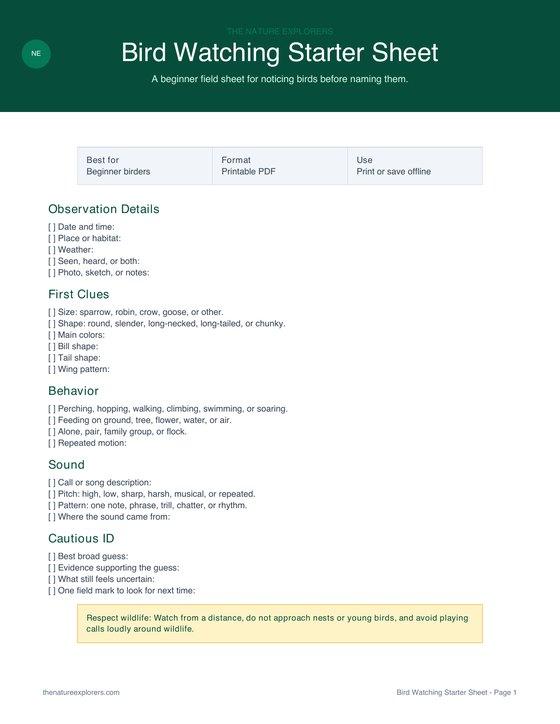
Wildlife
A beginner field sheet for recording bird size, shape, color, behavior, habitat, sound, and first identification clues.
1 page · Best for beginner birders
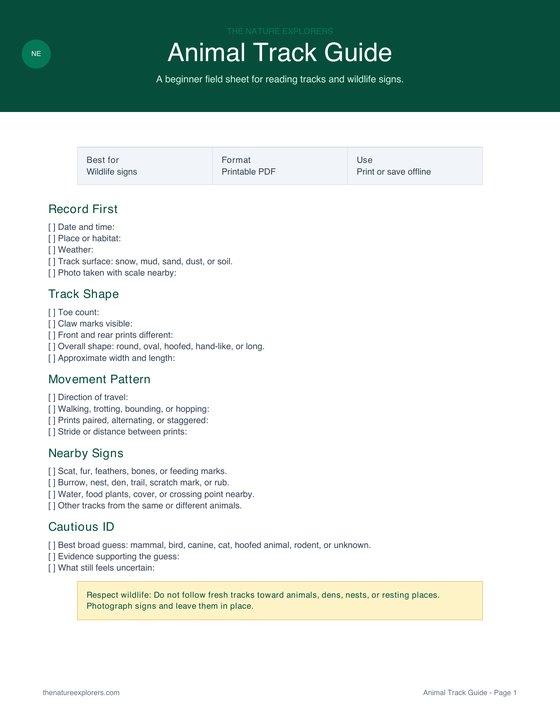
Wildlife
A beginner field sheet for noticing track shape, toe count, claw marks, gait patterns, and nearby wildlife signs.
1 page · Best for wildlife signs


